
Roulette in Ontario: Which Wheel to Play and Why It Matters

Roulette is the most elegant game on the casino floor and, in one specific way, the simplest to play well — because unlike blackjack, there’s no strategy that changes your odds once the wheel is spinning. That sounds like bad news, but it actually hands you a single, powerful decision that most players get wrong before they place a chip: which wheel you play. I spun the wheel at Fallsview for years, and I watched countless players agonise over which numbers to back while ignoring the one choice that genuinely affected their money. Let me fix that. Here’s how roulette really works, which wheel to choose and why, what the bets actually pay, and why every “system” you’ve heard of is a myth.
The one decision that matters: European vs American
Here it is, the single most important thing in this entire guide: choose the European wheel, not the American one. They look nearly identical, they play identically, and they cost you wildly different amounts — and most players never notice.
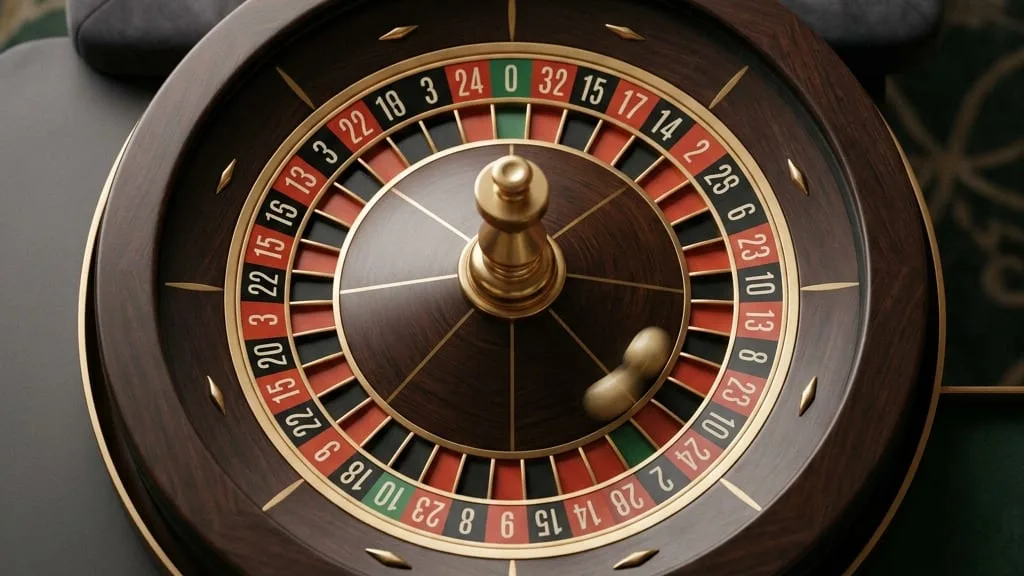
The difference is the zeros. A European roulette wheel has 37 pockets: numbers 1 through 36 plus a single zero. An American wheel adds a second zero (a “00”), making 38 pockets. That one extra pocket doesn’t change how you play or what the bets pay — but it nearly doubles the house edge. European roulette has a house edge of about 2.7%; American roulette, about 5.3%. Same game, same bets, same experience, for almost twice the cost to you. There is never a good reason to play American roulette when a European wheel is available, and a good Ontario casino will offer European (and sometimes French, which is better still). If a site only offers American roulette, that tells you something about whose interests it has in mind. Check the wheel before you sit down — it’s the roulette equivalent of checking that blackjack pays 3:2.
French roulette: even better on even-money bets
If you can find a French roulette table, it’s worth knowing why it’s the best of the three. A French wheel is physically the same as European — single zero, 37 pockets — but it adds rules called “La Partage” or “En Prison” that apply to even-money bets (red/black, odd/even, high/low). When the ball lands on zero, instead of losing your even-money bet outright, you either get half of it back (La Partage) or it’s “imprisoned” for the next spin to potentially be recovered (En Prison).
The effect is to roughly halve the house edge on those even-money bets — down to around 1.35% — which makes French roulette, played on even-money bets, one of the better wagers in the whole casino. Not every Ontario casino offers French tables, and the rules only benefit even-money bets, but if you’re a red/black or odd/even player and you can find a French wheel, that’s the seat to take. The hierarchy is simple: French (on even-money bets) beats European beats American, every time.
The bets, and what they really pay
Roulette bets split into two families, and understanding them helps you play the game you actually want. Inside bets are on specific numbers or small groups — a single number (“straight up”) pays 35 to 1, but hits rarely; splits, corners, and streets cover more numbers for smaller payouts. Outside bets cover large groups — red/black, odd/even, and high/low each pay even money (1 to 1) and hit close to half the time; dozens and columns pay 2 to 1.
Here’s the thing to understand: on a European wheel, every one of these bets carries the same 2.7% house edge. The single-number bet isn’t a “worse” bet than red/black in house-edge terms — they cost you the same over time. What differs is the variance: betting single numbers is high-volatility (rare, big wins), while betting red/black is low-volatility (frequent, small wins). So choose your bets based on the experience you want — a steady grind or a long-shot thrill — not on a mistaken belief that one is mathematically smarter. They’re equally priced; they just feel completely different.
Why betting systems don’t work
Every roulette player eventually hears about a “system” — the Martingale (double your bet after every loss), the Fibonacci, the D’Alembert, and dozens more. Let me be completely direct, as someone who watched people bring these systems to my table for years: none of them work, because none of them can work. No betting pattern changes the odds of a roulette spin, because every spin is independent — the wheel has no memory of what came before, and no sequence of past results makes any future result more or less likely.
What systems actually do is rearrange how you lose. The Martingale is the clearest example: doubling after each loss feels like you’ll always recover, but a losing streak of even modest length either exceeds your bankroll or hits the table’s maximum bet, at which point you take one catastrophic loss that wipes out all the small wins. The system doesn’t beat the house edge; it just trades many small wins for the occasional huge loss, and the maths comes out exactly where the house edge says it should. The red that’s come up five times in a row is not “due” to turn black — that’s the gambler’s fallacy, and it’s cost more players more money than any other single mistake at the wheel. Bet for fun, on the wheel with the lowest edge, and ignore anyone selling a system.
Where the house edge actually comes from
It’s worth understanding exactly why roulette costs you what it does, because it makes the European-vs-American point click permanently. On a European wheel there are 37 pockets, but a straight-up bet on a single number pays 35 to 1. If the game were “fair” with no house edge, it would pay 36 to 1 — matching the 37 possible outcomes minus your stake. That gap between the true odds (36 to 1) and the payout (35 to 1) is the house edge, and it exists because of the zero: the zero is the pocket that isn’t covered by any of the number-group bets, and it’s where the casino’s margin lives.
Now you can see precisely why the American wheel is so much worse. Adding a second zero doesn’t change the payouts — a single number still pays 35 to 1 — but now there are 38 pockets against that same payout, so the gap between true odds and payout widens, and the house edge nearly doubles. The casino didn’t change what it pays you; it just added another pocket where it collects. Every bet on the table inherits that widened edge. This is why “which wheel” is the only decision that meaningfully moves your money: the zero (or zeros) is the entire source of the house’s advantage, so the number of them is the whole game. Choosing European over American is choosing to face one zero instead of two — literally halving the source of your disadvantage.
How to play roulette well
Putting it together, playing roulette well is refreshingly simple because so little is in your control — which means the few things that are matter enormously. Choose the right wheel: French if available and you’re betting even money, otherwise European, never American. Decide the experience you want and bet accordingly — outside bets for a steady, low-variance session, inside bets for long-shot thrills, knowing they cost the same over time. Set a budget and a deposit limit before you start, because roulette’s rhythm is hypnotic and spins add up. And ignore systems entirely — they’re a way to lose with extra steps.
That’s genuinely the whole game. Roulette doesn’t reward study the way blackjack does, because there’s no decision after the bet is placed — but that’s freeing. Pick your wheel, pick your style, set your limit, and enjoy one of the most atmospheric games in the casino for exactly what it is: a graceful bet on where a ball lands, best played on the wheel that takes the least from you.
One more practical note on making a session last, since roulette’s low-variance outside bets and high-variance inside bets demand different bankroll thinking. If you’re betting red/black or odd/even, your money will ebb and flow gently, so a modest bankroll can give you a long, pleasant session — set a stake you’re happy to repeat many times and enjoy the rhythm. If you’re chasing single numbers, expect long dry spells between hits, so either accept that as the price of the occasional 35-to-1 thrill or keep those bets small alongside steadier ones. A common, sensible approach is a mix: mostly even-money bets to keep you in the game, with the occasional small straight-up bet on a “lucky” number for the fun of it. Just remember the mix doesn’t change your overall edge — it only shapes the ride — and set your deposit limit first so the hypnotic pace of the wheel never talks you past your budget.
Playing roulette safely in Ontario
As with any casino game, the wheel only matters if it’s honest. At an AGCO-registered Ontario casino, roulette — software or live — is independently tested for fairness, so the outcomes are genuinely random and the odds are exactly as stated. At an unregulated offshore site, you have no such assurance. So before you choose your wheel, choose your casino: verify the operator on the iGaming Ontario register, the same principle behind spotting a safe Ontario casino. The lowest house edge in the world means nothing on a wheel you can’t trust to be fair.
Online roulette FAQ
What’s the difference between European and American roulette?
European roulette has 37 pockets (1–36 plus a single zero) and a house edge around 2.7%. American roulette adds a second zero (00), making 38 pockets and nearly doubling the edge to about 5.3% — the same game for almost twice the cost. Always choose European where it’s offered.
What is French roulette and is it better?
French roulette uses the same single-zero wheel as European but adds La Partage or En Prison rules that return half (or hold) your even-money bet when the ball lands on zero. This roughly halves the house edge on even-money bets to about 1.35%, making it the best roulette option for red/black-style players where available.
Which roulette bet has the best odds?
On a European wheel, every bet carries the same 2.7% house edge — a single number isn’t worse than red/black in cost terms. What differs is variance: single numbers are high-volatility (rare, big wins), red/black is low-volatility (frequent, small wins). Choose based on the experience you want, not a belief that one is mathematically smarter.
Do roulette betting systems like Martingale work?
No. No betting system changes the odds, because every spin is independent — the wheel has no memory. Systems just rearrange how you lose: the Martingale trades many small wins for the occasional catastrophic loss when a losing streak hits your bankroll or the table limit. The house edge is unchanged.
Is a colour that hasn’t come up “due”?
No — that’s the gambler’s fallacy. Red coming up five times in a row does not make black more likely next spin; each spin is independent with the same odds. Believing otherwise has cost players more money than almost any other roulette mistake.
Is online roulette fair in Ontario?
At AGCO-registered casinos, yes — roulette is independently tested, so outcomes are genuinely random and the odds are as stated. That guarantee doesn’t exist on unregulated offshore sites, so verify the operator on the iGaming Ontario register before playing. The lowest house edge means nothing on a wheel you can’t trust.
See our full list of verified licensed Ontarian casinos — every casino checked against the iGaming Ontario list of registered operators.
Explore Ontario table & live sites →19+ only. Please gamble responsibly.
Free help available: connexontario.ca | Helpline: 1-866-531-2600
Related Posts